
How to Hide a Litter Box in a Small Apartment Without Losing Your Style
The open pan in the corner is the first thing guests notice and the last thing you want them to. In a small apartment the litter area competes with everything else for floor space, and most pans lose that fight. Hiding the box is not about deception; it is about giving that square footage back to your life.
Why the Open Pan Fails in Apartments
Smell is the first complaint, and it gets worse in a poorly ventilated room. Litter ends up tracked across the floor because it sticks to paws and fur. The pan itself reads as pet gear, which clashes with the furniture you actually chose. A one-bedroom rarely has a spare closet to donate to a litter station, so the box ends up in the main room where everyone sees it. The enclosure furniture overview explains why this setup beats a bare pan in tight spaces.
Slide It Inside Furniture
The simplest move is a litter box enclosure that looks like a cabinet, a bench, or a side table. Your cat enters through a cutout; you keep a flat top for a lamp or a plant. The pan stays out of sight, and the piece earns its place in the room. Many cat owners report that a cabinet matching their wood tone stops reading as pet gear within a week.
Go Vertical With a Tower-Enclosure Combo
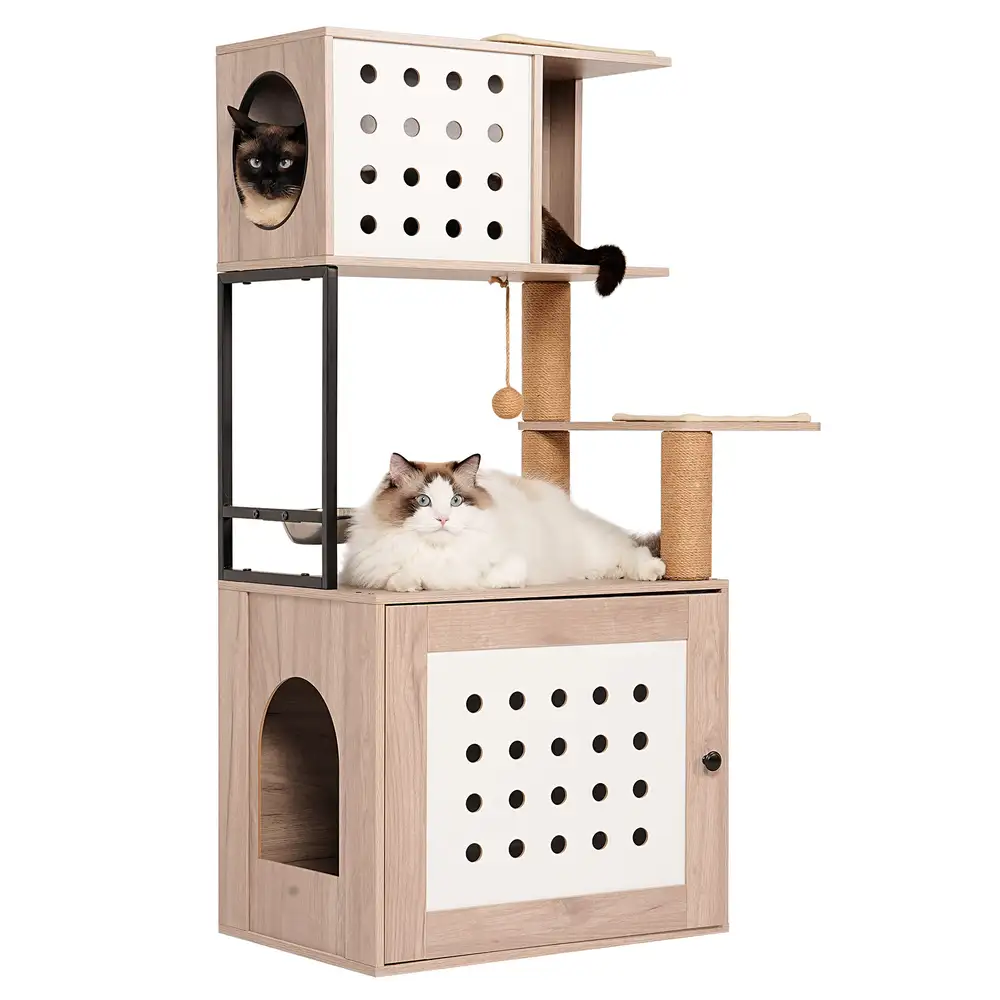
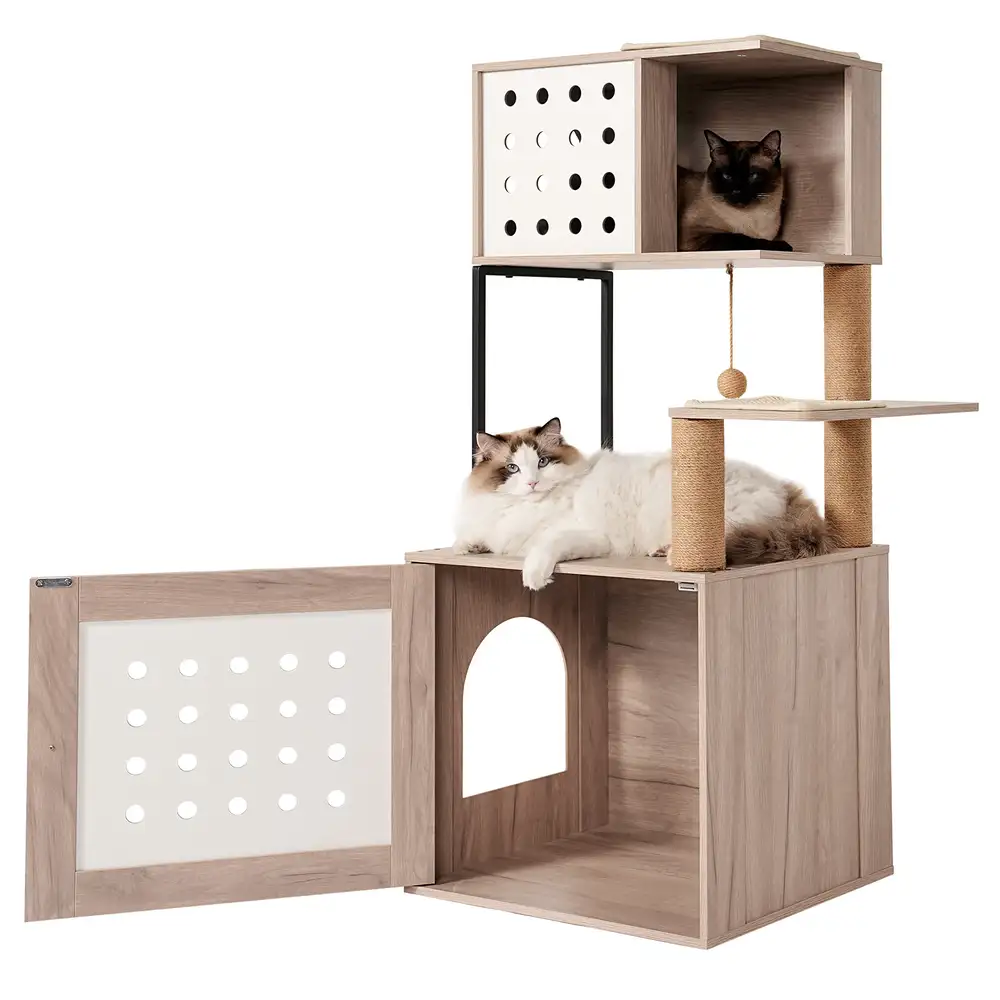
A tower that hides the box underneath does two jobs in one footprint. It gives your cat a place to climb while the litter stays behind a panel door below. The unit stands 47.24 inches tall but only 16.93 inches wide, so it parks against a wall without blocking the walkway. Our natural wood and white cat tower litter box pairs a climb-and-rest tower with an enclosed cabinet, which clears floor space and cuts the clutter at the same time.
Match the Room With a Two-Tone Finish
Color is where most cat furniture fails. Beige carpet and dark brown posts clash with a modern sofa, and the piece starts looking like temporary gear. A two-tone natural wood and white body fits Scandinavian and light rooms without reading as pet equipment. The light finish also hides litter dust better than espresso fronts, which show a gray film within a day or two. The white enclosure style guide shows how the finish changes the whole room.
Control Smell at the Source
Furniture hides the view, but it does not filter air. Scoop every day, pick a low-dust litter, and set a mat at the entrance to catch stray granules before they reach the cushions up top. The door panel conceals the box; daily upkeep does the real odor work. Cats notice smells roughly fourteen times more sharply than people do, so a sealed compartment that you skip scooping will smell worse than the open pan you replaced.
What to Check Before You Buy
Measure your current pan, because the interior must clear the door. Confirm the piece has ventilation, not just a sealed box. Check the base for stability, since a tall tower needs a steady stance and a wall strap for backup. A piece that fits the pan and matches your wood tone is the one you will still like six months from now.
Trusted litter box resources
- The Humane Society: Preventing Litter Box Problems covers placement, cleaning, and the reasons cats abandon a box.
- International Cat Care: Litter Box Problems explains the rules cats follow when they choose where to go.
Shop the natural wood and white cat tower litter box
Our 47-inch natural wood and white cat tower litter box enclosure hides the pan inside a cabinet and stacks a climb-and-rest tower on top. Pair it with a second enclosure if you run a busy home, or keep it as the one piece that handles climbing, resting, and hiding in a single footprint.
Frequently Asked Questions
What is the best place to hide a litter box in an apartment?
Against a wall or in a corner where the enclosure reads as furniture, away from the kitchen and the feeding area. Avoid loud appliances and high-traffic paths, because cats want privacy when they go.
Will my cat use a hidden litter box?
Most cats do, especially when you keep the old pan nearby and open the door wide for the first week. About 20 to 30 percent resist any enclosed box, so a slow transition beats a sudden switch.
How do I stop litter smells in a small space?
Scoop daily, choose a low-dust clumping litter, and place a mat at the entrance. A sealed compartment holds odor, so ventilation cutouts and a charcoal filter matter more here than they do with an open tray.
Can I build my own hidden litter box?
Yes, a cabinet with a side cutout works, but sizing the interior to a real pan is the part people miss. A ready-made enclosure saves the measuring and the failed trips to the hardware store.