
A Cat Tower and a Litter Box in One: The Small-Space Fix
Most cat homes end up with two big items fighting for the same corner: a cat tree the cat loves and a litter box nobody asked to look at. The tower-enclosure combo removes that standoff by stacking both into a single body. One piece climbs, rests, scratches, and hides the box, which is exactly what a small room needs.
The Floor-Space Math
A separate tree and a separate enclosure can eat a full wall of floor space. The combo stands 47.24 inches tall and only 16.93 inches wide, so it sits against a wall or in a corner without blocking the walkway. You trade two footprints for one, and the cleared space goes back to your actual furniture. In a one-bedroom that trade is the difference between a crowded room and a calm one. The apartment cat furniture guide covers the wider floor-plan picture.
What Your Cat Gets
Cats are hardwired to climb, and a tower gives them the vertical territory they keep looking for. This one adds a hammock and a cushioned bed up top, both set away from the litter below. A 70 mm sisal post plus a detachable pad give real places to scratch instead of your sofa. The high perches also act as a vantage point, which is the thing most cats want before they want anything else. The vertical space explainer goes deeper on why height matters for indoor cats.
What You Get
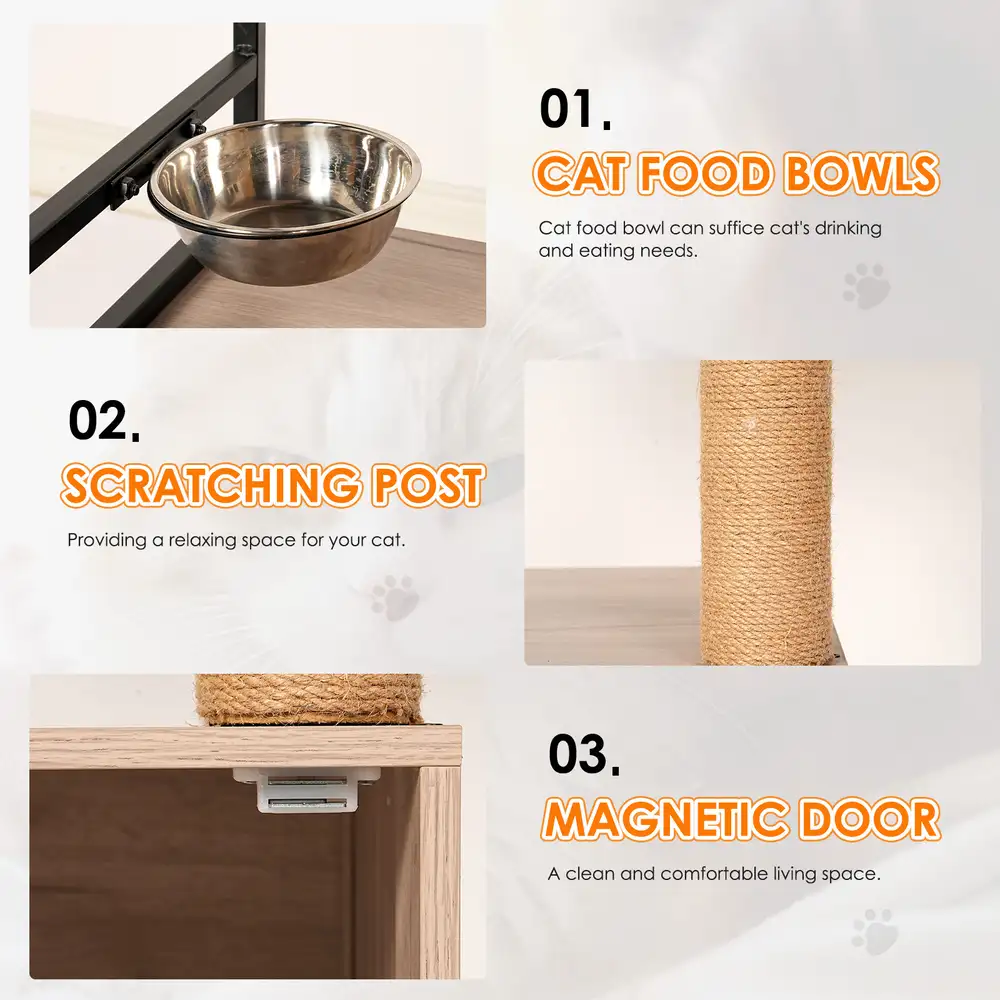
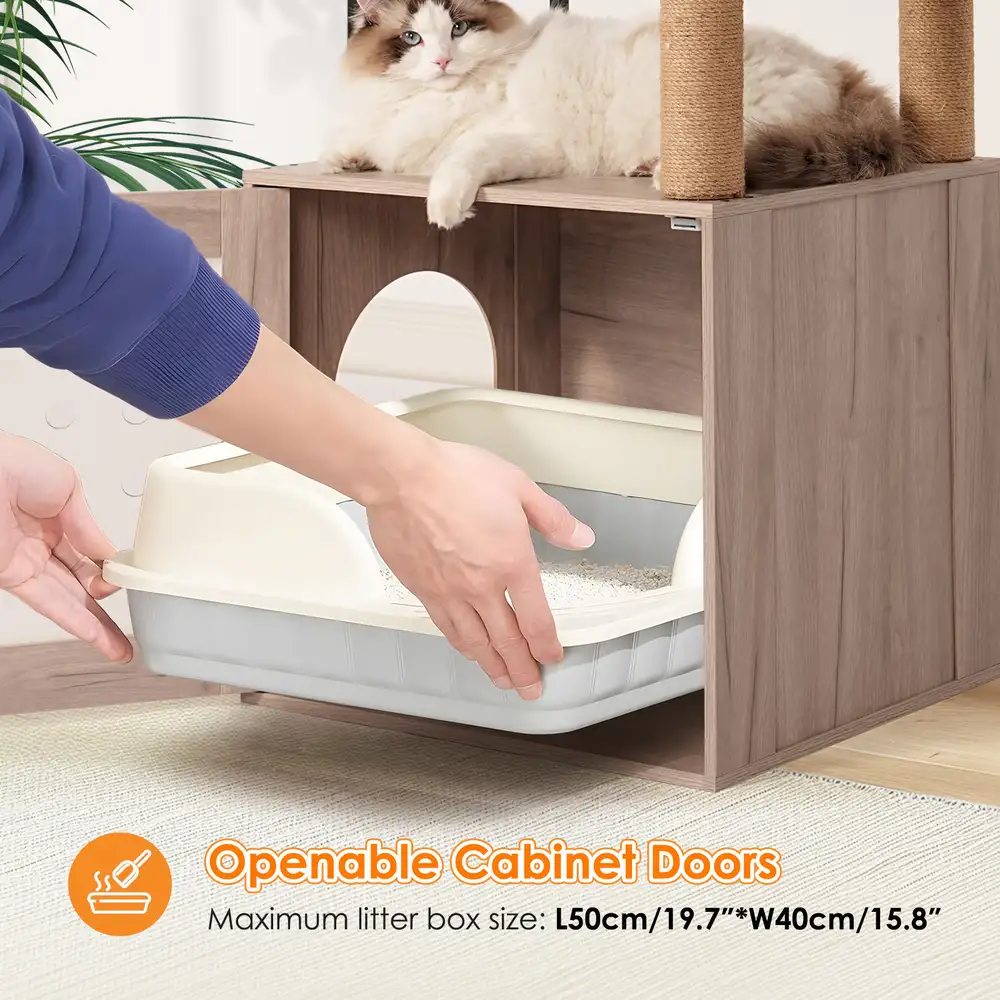
The litter stays behind a panel door, so guests see furniture instead of a pan. The natural wood and white two-tone body pairs with light and neutral rooms without reading as pet gear. A stainless steel feeding station sits above the litter cabinet, which keeps food and water clear of the box below. The detachable scratch pad fastens with hook-and-loop strips, so it pulls off for cleaning instead of trapping fur against the tower.
Will It Stay Put?
A tall tower is only useful if it does not wobble, because cats remember an unstable perch and avoid it after one bad landing. The base uses a square-tube frame with anti-slip foot pads, which gives a steadier stance than thin poles alone. The footprint is still narrow for its height, so the included anti-tipping strap anchors to the wall and should be fitted before your cat jumps up.
Is It Right for Your Cat?
The unit fits a single cat better than a busy multi-cat home, since there is one litter cabinet and limited perch space. Larger or active cats are fine on the steady frame, though the feeder sits off the ground and an older cat may want a low step nearby. Two cats can share the tower for climbing, but the single litter area may lead to guarding, and a second box elsewhere is often still needed.
Trusted resources on indoor cats and height
- International Cat Care: Keeping Your Cat Happy Indoors explains why climbing and perching matter so much to indoor cats.
- The Humane Society: Preventing Litter Box Problems covers the box side of the combo, from placement to daily scooping.
Shop the natural wood and white cat tower litter box
Our 47-inch natural wood and white cat tower litter box enclosure hides the pan inside a cabinet and stacks a climb-and-rest tower on top. Pair it with a second enclosure if you run a busy home, or keep it as the one piece that handles climbing, resting, and hiding in a single footprint.
Frequently Asked Questions
How tall is the tower and how much floor space does it take?
It stands 47.24 inches tall and 16.93 inches wide, with a depth of 21.65 inches. The narrow width lets it sit against a wall or in a corner without blocking the walkway.
Is the tower steady enough for a large or active cat?
The base uses a square-tube frame with anti-slip foot pads, which gives a steadier stance than thin poles. Attach the included anti-tipping strap to the wall, especially if your cat leaps to the top perch.
What size litter pan fits the lower cabinet?
The lower cabinet holds a pan up to 19.7 inches long and 15.8 inches wide, which fits most standard and large open or hooded pans.
How hard is assembly?
Plan to assemble on a clear patch of floor with a screwdriver. The boards arrive numbered and the diagram walks through each step, so you can tell which piece goes where without guessing.