
Hidden Cat Litter Box Furniture: 10 Stylish Options for Small Apartments
A litter box on display is the one thing that ages a small living room fast. The fix is to fold the box into a piece of furniture you’d want anyway, so the room reads clean instead of like a pet supply aisle. Most OmniHaven enclosures ship from our U.S. fulfillment partner in 3–9 business days, so the swap happens in under a week.
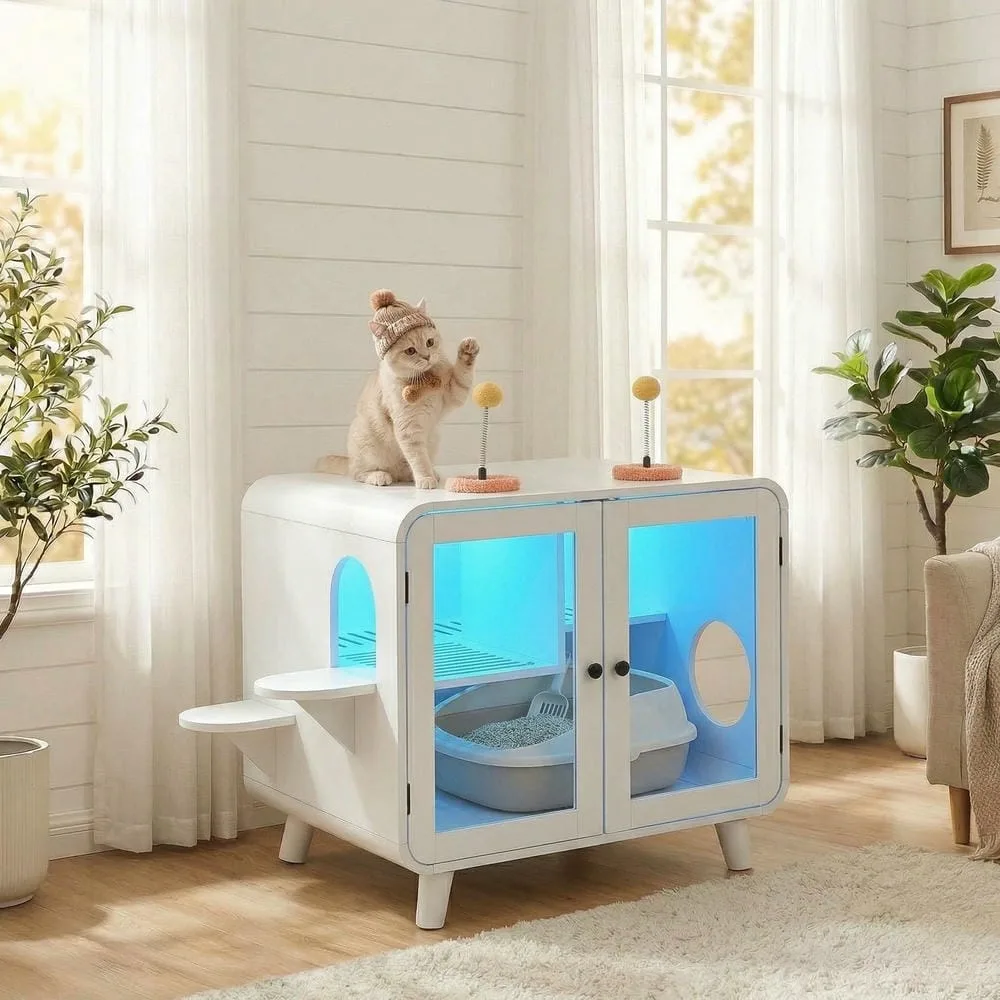
A plastic tray in the corner of your living room isn’t fooling anyone, and in a small apartment with no mudroom it’s the first thing guests notice. That’s the real reason hidden enclosures caught on: they solve an actual problem instead of hiding it. Below are ten setups that read like normal furniture, not pet gear. None of this needs a remodel, just one piece you were probably going to buy. If your cat is older or has stiff joints, check the entry height before you buy; a low step-in saves them a jump they may not want to make twice a day.
10 Hidden Litter Box Ideas You’ll Love
If you’re after a box that disappears into the room, an
hidden litter box enclosure
is the most direct route. Every cat home needs a box, but the open plastic kind rarely sits well next to a linen sofa or a walnut table.
Cats want a calm, private spot for their business, same as you’d want a bathroom door that closes. Many homes just don’t have a spare room for it, and that’s the gap these pieces fill:
How do you give your cat a working litter spot without wrecking the room’s style?
Open boxes usually end up shoved in a corner, a bathroom, or the laundry room, mostly because nothing about them matches the rest of the room. Once it’s tucked into furniture, you’re more likely to keep up with scooping, because the mess isn’t staring at you.
Left out, they tend to cause the same few headaches:
- A mess that dominates the room
- Litter and scoops left out in the open
- Almost no privacy for your cat
- A harder time keeping the room clean
The Rise of Hidden Litter Box Furniture
That’s why more owners are moving to a hidden cat litter box setup.
Cat furniture has shifted how people see the box. Ten years ago the box lived in a closet. Now it sits in the room as a cabinet, and most visitors never guess what’s inside. Instead of treating it as something to shove out of sight, owners now look for a piece that already belongs in the room. A match to your existing wood tone is what makes it disappear, not the shape alone.
A well-made cat litter box enclosure gives your cat privacy and reads as a normal cabinet, not a pet product. Wipe the inside with a pet-safe cleaner each time you change the litter, and the cabinet stays fresh far longer than an open tray would.
What follows are ten setups, from a TV-stand cabinet to a slim side table, with notes on which fits your space, your cat, and what you want to spend. Read the entry height against your cat’s size before you commit, a tall step can put off a small or senior cat. None need tools you don’t own, a screwdriver at most.
Why Hidden Cat Litter Boxes Are Catching On
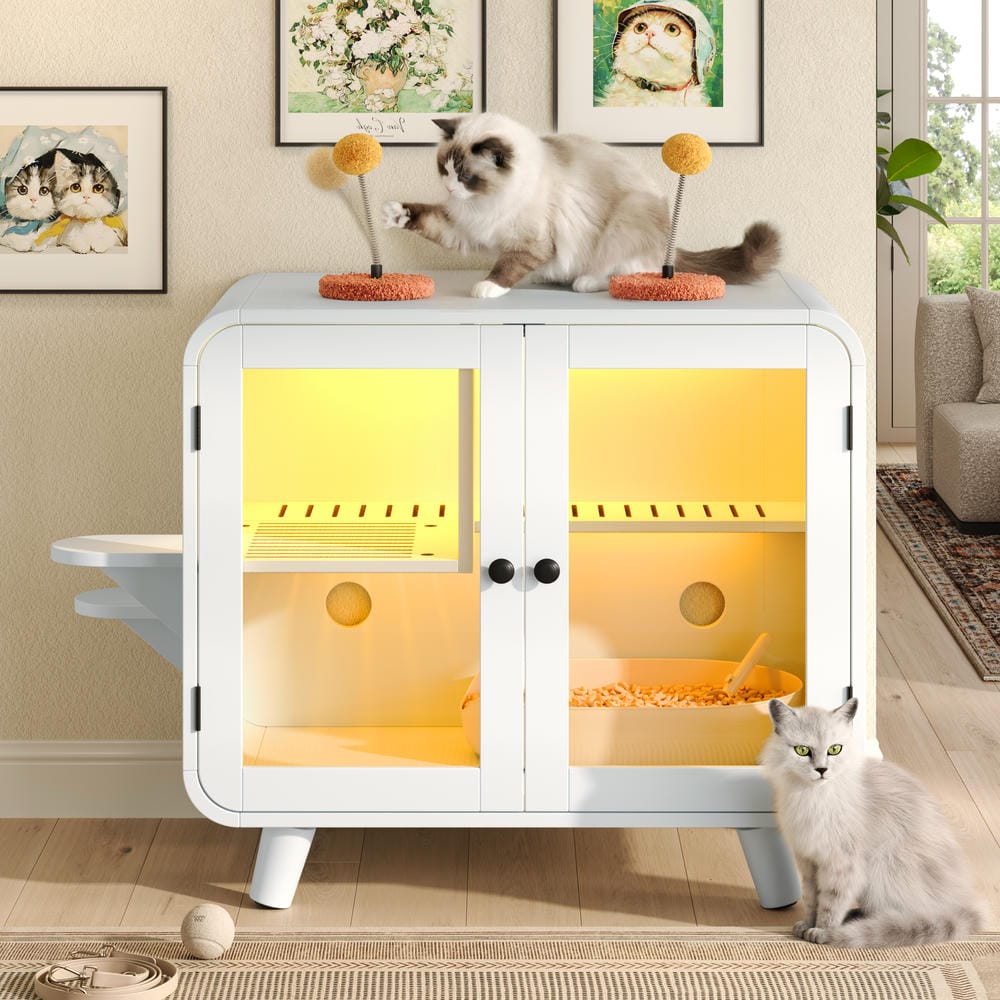
Better Match Your Home Interior Design
Most people put real effort into making their living room feel finished. A finish that matches your other wood does most of that work for you.
The furniture, the lighting, the way things are laid out, it all adds up to a room you actually want to sit in. Even a lamp and a throw pull a room together, and the box shouldn’t undo that.
A bare plastic tray breaks that spell the second you look at it.
A furniture-style hidden cat litter box closes that gap by doing three jobs at once:
- A place for the box
- A piece that looks like decor
- Room for litter and a scoop
- Lines that match your other furniture
Done right, the enclosure stops reading as pet gear and starts reading as:
A cabinet
A side table
A decorative piece
A normal part of the room
That’s what lets you keep the box out in the open, in places like:
- The living room
- A bedroom
- A home office
- A studio apartment
Your cat’s needs and your sense of style finally stop fighting each other. Pick one finish and repeat it once, in a frame or a bowl, and the room settles.
What to Look for in Hidden Cat Litter Box Furniture
Before the ideas, here’s where most people go wrong when they buy one:
Size: measure your pan first, height, width, and depth, then check the cabinet’s inside dimensions.
Assembly: skip anything with a 2-hour build and instructions that read like a puzzle.
Material: avoid raw particle board; sealed MDF or solid wood holds up better near litter.
Odor: look for side vents, since nobody wants a wall of smell when the door opens.
Keep those four in mind as you read on. I’ll flag which ideas actually clear those bars.
10 Stylish Hidden Cat Litter Box Ideas
For Living Rooms: Stylish Solutions for Your Main Space
The living room is where you actually live, so it deserves pieces that earn their spot. The five ideas below turn the box into part of the decor instead of the thing you apologize for. The difference is a tray on the floor versus a side table you’d show a guest.
1. Choose a Furniture-Style Cat Litter Box Enclosure
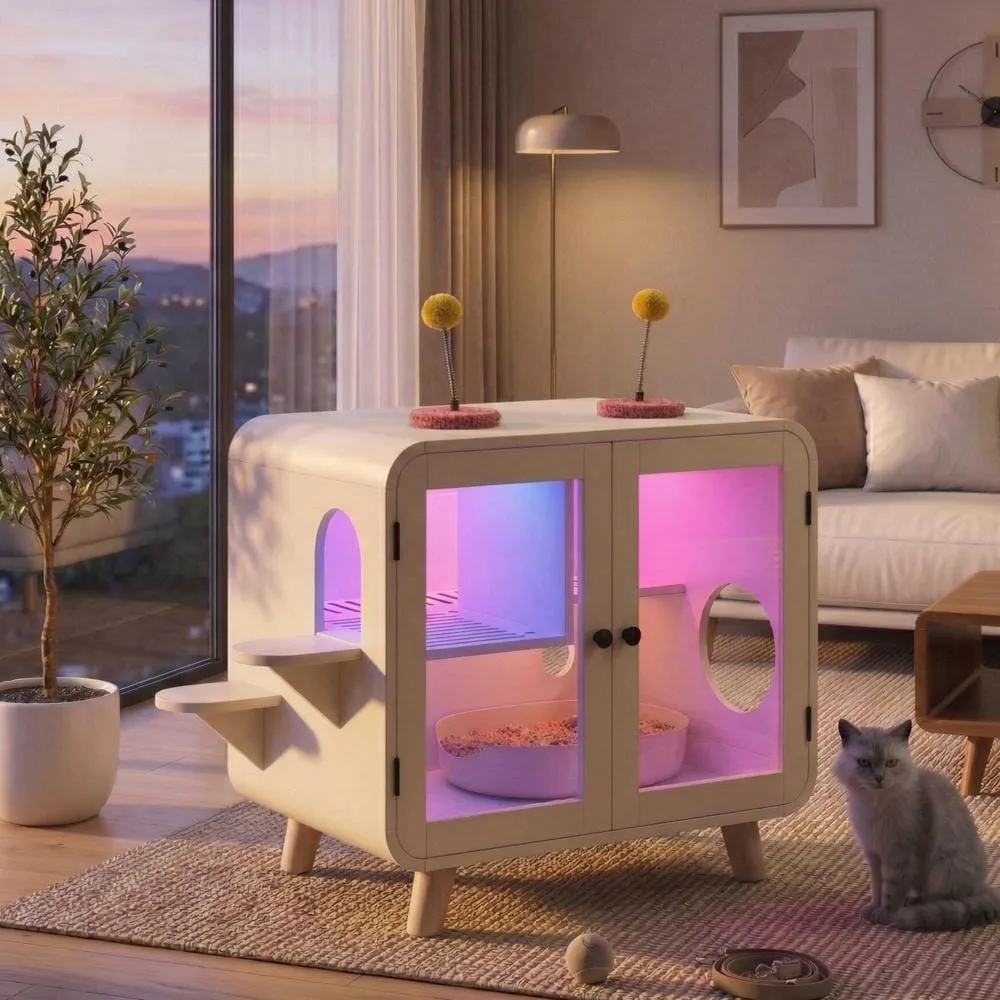
If you only try one thing, start here. A cat litter box enclosure wraps the box in a cabinet that sits where a side table would, so the room doesn’t change around your cat. Check the inside height before you buy, some pans sit taller than they look.
A well-designed enclosure should provide:
- A low, wide door your cat will use
- A top or front that lifts for scooping
- Side vents so the inside stays dry
- Enough floor space that she doesn’t feel cornered
They’ve caught on because they fix the practical and the visual problem at once, which is rare for pet gear.
The old question was “where do I hide the box?” The better one is “which piece makes the box feel like it belongs here?”
2. Turn Your Cat’s Bathroom Into a Decor Piece
A lot of owners assume pet furniture has to look like pet furniture.
It doesn’t.
When the finish matches your room, the enclosure stops being a compromise and becomes a piece you’d pick anyway. A walnut or white shell disappears faster than a bold color in most rooms.
Popular designs include:
- Retro-inspired cabinets
- Flat-front minimalist boxes
- Warm wood houses
- Storage-style enclosures
A design with a point of view makes the corner feel planned, not hidden. If the shape is clever but the wood clashes, you’ll still read it as pet gear.
If a finish clashes with your room, it’ll read as pet gear no matter how clever the shape is, so match the wood first.
The aim is for the cat’s spot to sit in the room, not announce itself.
💡Design Tip
Pick a finish close to what you already own, wood, paint, or metal, and the cat’s corner reads as part of the room instead of a separate zone.
3. Create a Cat-Friendly Home Without Sacrificing Interior Design
The old trade was pretty room or happy cat. You don’t have to pick. Both can land in the same corner.
A calm cat and a room you like aren’t opposites. A cat tree in the corner and the box in a cabinet reads as a room, not a pet zone.
A setup that works usually covers a few bases:
- A perch or bed she’ll use
- A scratcher that isn’t ugly
- A litter spot that stays closed
- A drawer for the scoop and bags
You’re not quarantining her stuff in a corner. You’re building one room you both use, which is the whole point.
This idea has become a major trend in modern interior design:
Good pet furniture blends in, it doesn’t announce itself.
4. Reduce Clutter With Built-In Storage Solutions

Cat stuff piles up faster than you’d think.
The usual suspects:
- Backup litter bags
- A scoop and wipes
- The toy pile
- Treats
- Brush and nail clippers
Leave them loose and the room feels busy within a week.
An enclosure with a drawer or shelf keeps the basics in one spot. A shallow drawer beats a deep one, you want the scoop in reach, not buried.
Store the scoop and bags right there and the top stays clear, which is most of the battle in a small place. Keep the top clear and the corner looks styled, not stored.
This is especially helpful for:
- Studios and one-bedrooms
- Houses with kids
- Rooms that do double duty
Good pet furniture helps your cat and your day, not one at the other’s expense.
5. Choose a Statement Piece Like a Retro TV Cat Litter Box Enclosure
In an apartment, the right ideas are the ones that don’t ask for more floor space. A piece with a bit of personality can also change how the whole litter corner reads.
The OmniHaven Retro TV enclosure was built around one idea: it’s the piece people ask about, not the one you explain.
Pet furniture should fit the way you actually live.
Instead of a tray on the floor, it pairs:
A retro TV-cabinet look
The litter box tucked inside
Soft RGB lighting
A low cat entrance
A footprint that earns its place
Your cat gets a quiet nook, and the room gets a conversation piece instead of an eyesore. Put a plant on top and the piece reads as decor, not pet gear.
Set it in a living room, a bedroom, or a corner, and it’s the thing people ask about, not the thing you explain away. One caveat: skip the RGB if the room is already warm and busy, it just adds glow you don’t need.
For Small Spaces & Corners: Maximizing Every Inch
In a small place every square foot counts, and these ideas show that even a tight corner or a bare wall can pull real weight for you and your cat.
6. Create a Stylish Cat Corner in Your Living Room
In a living or dining room, a sideboard already earns its keep. Add a hidden litter section and it becomes three things at once: storage, a serving top, and the cat’s spot. The serving top is where it earns its keep, a lamp there and nobody questions it.
That’s why people keep boxes out of the living room, the old open kind is hard to hide. An enclosure changes that math.
A modern enclosure flips the experience.
A corner done well usually holds:
- The box, behind doors
- A toy basket
- A cushion for naps
- A drawer for supplies
You end up with a corner that looks planned instead of a pet dumping ground. A planter or two finishes the corner without adding clutter.
In an open-plan place this matters most, since the living room is also the room everyone sees.
A good piece makes the home feel more finished, not less.
7. Use Multi-Functional Cat Furniture for Small Spaces

If you rent a small place, floor space is the one thing you can’t buy more of.
Four separate pieces, a box, a house, a cabinet, a toy bin, eat the room alive:
- Litter box
- Cat house
- Storage cabinet
- Toy bin
and the room feels cramped before you’ve added a sofa.
That’s the pitch behind cat furniture for small spaces, one piece does several jobs. One cabinet instead of four also means one spot to dust, not four.
A multifunctional hidden litter box enclosure can combine several jobs:
- A private bathroom
- A nap spot
- Storage for the bits
- A piece that looks intentional
You get the space back and your cat gets a calm spot, which is the deal in a small home. Add a cushion on top and it doubles as a perch.
See the retro TV enclosure for small spaces
8. Choose Unique Designs That Reflect Your Personal Style
People want pet gear that says something about the room, not just about the cat.
That’s why the weirder, more personal designs sell.
A piece with a point of view beats a plain box, as long as it still opens for scooping. The retro TV cabinet is the one that gets the most second looks, for what it’s worth.
Examples include:
- Retro-inspired cabinets
- Clean modern houses
- Designer litter boxes
A design with character turns a need into something guests comment on.
Good pieces serve the cat and make the room better, not one at the other’s expense.
Bedrooms & Entryways: Compact & Functional
Your bedroom should feel like a retreat, and the entry should welcome you home, not hint at pet chores. These two keep the box out of sight while making the day run smoother.
9. Add Smart Features for a More Modern Cat Experience

Owners want more than a basic tray these days.
As smart-home gear spreads, litter furniture has picked up a few features that help both looks and use.
A modern enclosure might include:
- Soft LED lighting
- Easier to see at night
- More than one use
- A lower, easier door
These land well with people who like their tech and their decor to talk to each other.
A thoughtful smart cat furniture piece feels better for both of you to live with.
It stops being just the bathroom and becomes part of the room’s mood.
A warm low light reads cozy, not clinical, which is the line you want in a bedroom. Keep the light low and warm, not the blue-white of a desk lamp.
💡Pro Tip
Keep the tech in service of the day, not the other way. Any feature that makes scooping harder or stresses the cat isn’t worth it.
10. Consider Your Cat’s Privacy and Comfort
Looks matter, but your cat’s comfort runs the show.
Cats like quiet and a bit of cover when they go, it’s just how they’re built.
When you pick an enclosure, check these:
Is the door low enough for her to walk in?
Is there room to turn around inside?
Are the side vents actually open?
Can you scoop without a full teardown?
A pretty shell is nice, but the pieces that last combine:
- A look you like
- A door she’ll use
- A wipe-down you’ll keep up
Get those three and the box improves the room while keeping your cat calm, which is the whole win. Scoop daily and the enclosure stays the nicest piece of furniture in the room.
Hidden Cat Litter Box vs Traditional Litter Box
The right call depends on your layout, your cat, and how much you care about the room looking finished.
| Feature | Traditional Litter Box | Hidden Cat Litter Box Enclosure |
|---|---|---|
| Appearance | Visible plastic design | Furniture-style appearance |
| Home integration | Difficult to match | Designed to blend with interiors |
| Privacy | Limited | Provides a more private space |
| Storage | Usually none | Can include storage solutions |
| Living room placement | Often unattractive | Easier to incorporate |
For most modern homes, an enclosure balances:
- Function
- Comfort
- Cleanliness
- Design
Before we wrap up, here are the questions people actually ask about hidden litter boxes.
Frequently Asked Questions About Hidden Cat Litter Boxes
Are hidden cat litter boxes good for cats?
Yes, for most cats. They like a covered, quiet spot, and an enclosure delivers that without the cramped feel of a hooded pan.
Give her room to turn around, keep the side vents clear, and make sure the door isn’t a step-up she has to hurdle.
One watch-out: a senior cat with stiff joints may struggle with a tall entrance, so check the height before you buy. If your cat is shy, give it a week, some take time to trust the new door.
Can I put a hidden cat litter box in my living room?
Yes.
They’re built to sit out in the open, so the living room is fair game.
Many cat owners place them in:
- Living rooms
- Bedrooms
- Home offices
- Apartments
They read as furniture, not pet gear, which is the whole point. Just keep it off the main walkway so nobody kicks it mid-conversation.
Do enclosed litter boxes reduce litter tracking?
They help, yes, because the box sits inside a contained space instead of on the floor.
A low entry with a small mat just outside catches most of the cling, though long-haired cats will still trail some, no enclosure fixes that fully. Sweep the entry once a day and the trail stays small.
What is a good place to put a hidden cat litter box?
Quiet and easy to reach beats central and showy.
People use:
Living room corners
Bedroom areas
Laundry rooms, if dry
Home offices
The real test is whether she’ll walk there without thinking and whether you can scoop without moving furniture. Skip anywhere humid, like a bathroom with a shower, since the panel seams don’t love steady moisture.
Create a More Beautiful Home for You and Your Cat
The litter corner doesn’t have to be the ugly part of the room.
With the right piece, it becomes something you’d point to, not past.
An enclosure keeps the space tidier and gives your cat the cover she wants. Wipe the top weekly and it stays looking like furniture, not a chore.
We’d rather pet furniture feel like part of the home than a separate category.
That’s the aim, pieces you actually live with.
From modern cat furniture to hidden litter setups, the goal is a home that’s clean and calm for everyone in it.
The ASPCA’s cat care guidance is a solid place to read up on what makes a litter setup work for your cat.