
Do Cats Like Litter Box Furniture? What to Know Before You Buy
You want the litter box out of sight, and litter box furniture promises exactly that. The catch is simple: the furniture only works if your cat agrees to use it. Plenty of people buy a handsome cabinet, slide the pan inside, and then find the box ignored in favor of the bathtub. The good news is that most cats do adjust, and the ones who struggle are usually predictable.
Will Your Cat Actually Use It?
About 20 to 30 percent of cats resist any enclosed box, so a few days of hesitation is normal rather than a sign of failure. Most cats read the cabinet as just another box once the smell and the litter stay familiar. Keep the old open pan next to the new piece for the first week, prop the cabinet door fully open, and close it a little more each day. Patience here pays off, because a cat that feels rushed will pick a corner you like even less.
Who Benefits the Most
Single-cat apartments gain the most from this setup. The box disappears into a side table or a tower, and the floor space returns to actual living. Guests stop clocking the pan within seconds, which matters in a one-bedroom where the litter area sits near the sofa. Renters benefit too, because nothing gets remodeled and the piece moves with you at the end of the lease. The litter box enclosure furniture guide covers the main styles if you are still deciding between a bench, a cabinet, or a tower.
Where It Can Backfire
A multi-cat home is the obvious risk. One cabinet and one pan invite guarding, and a second box elsewhere is still required. Cats that have refused covered boxes their whole lives are unlikely to change, so forcing the issue creates stress for no reward. Ventilation is the quieter problem: a sealed compartment traps ammonia, and cats notice smells roughly fourteen times more sharply than people do. Skip the daily scoop and the enclosure smells worse than the open pan you replaced. If your cat has already started avoiding the box, the causes and fixes are worth reading before you blame the furniture.
Picking a Piece That Works
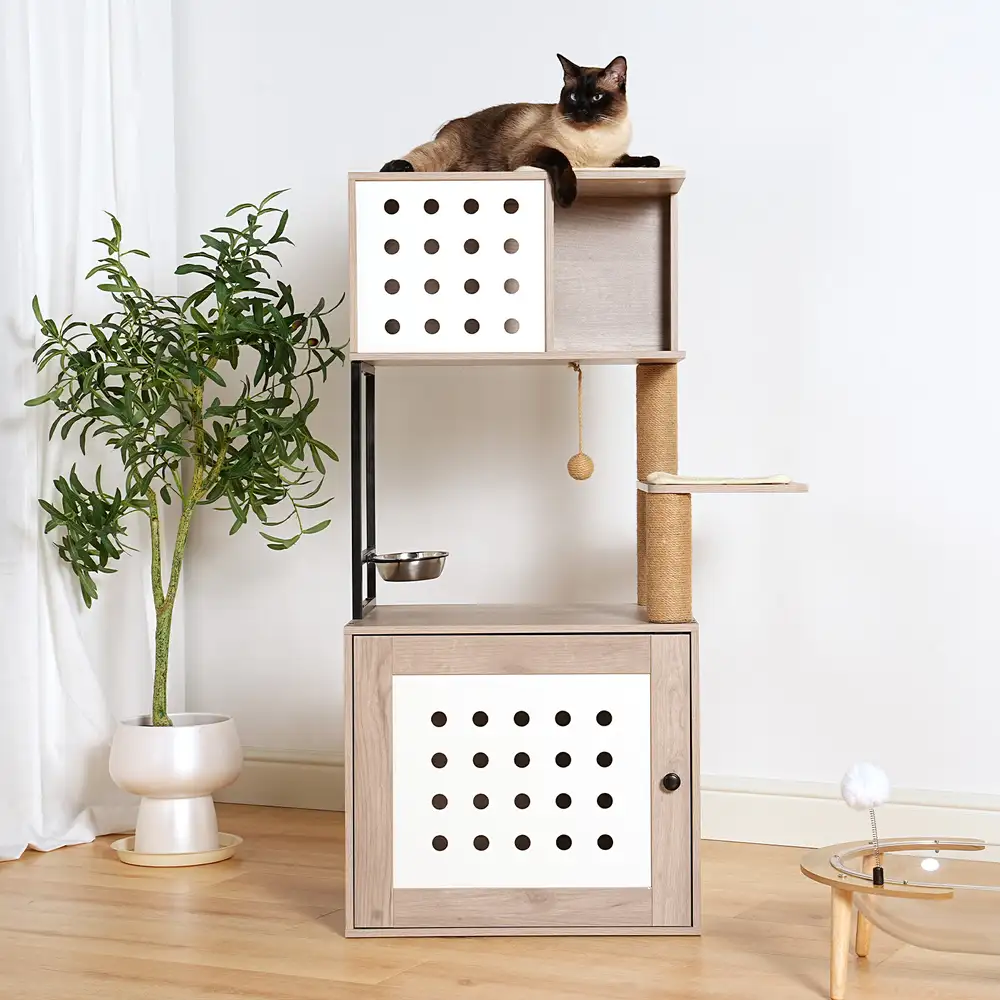
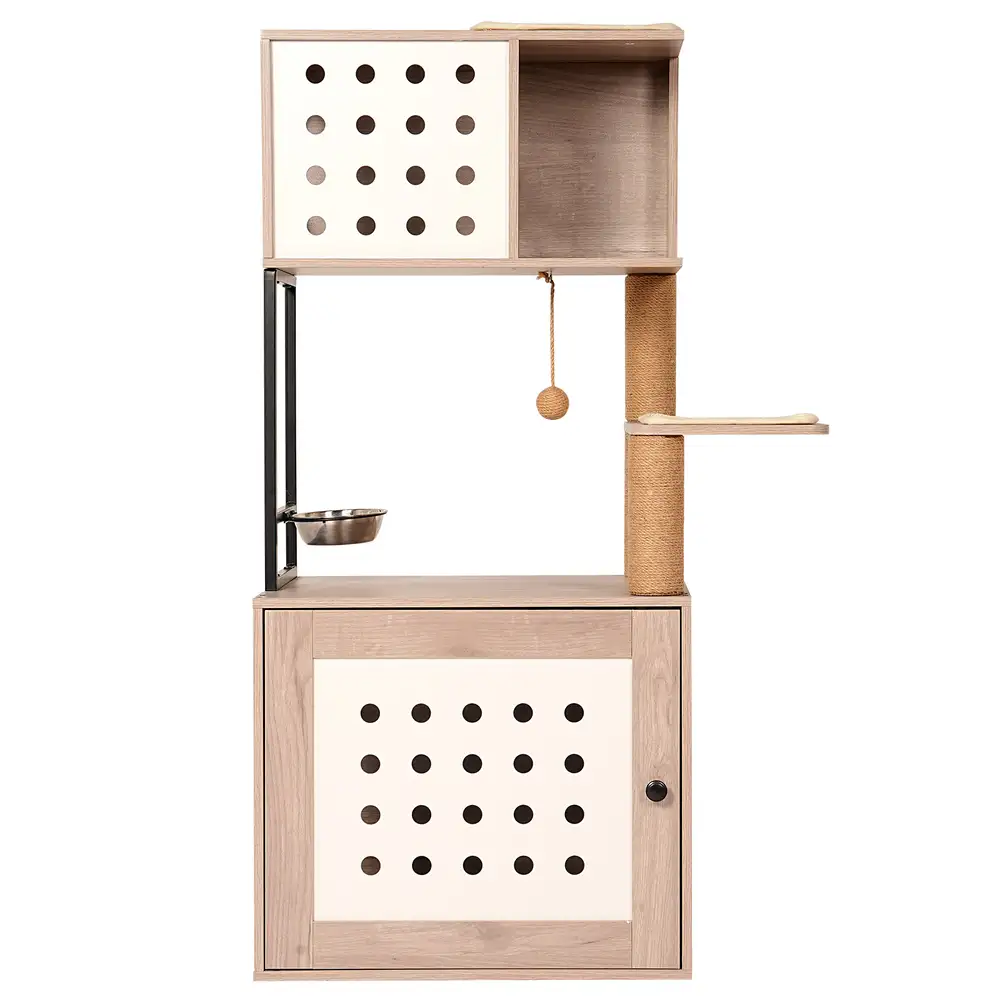
Size the interior to your current pan before you order, because a pan that clears the door is non-negotiable. Look for a cutout or a charcoal filter so air moves through the compartment. A two-tone finish in natural wood and white blends with light rooms instead of reading as pet gear. Some combinations stack a cat tower on top of the cabinet, which handles climbing and hiding in a single footprint. Our natural wood and white cat tower litter box does exactly that, with a hammock and a bed up top and the pan tucked below.
Trusted litter box resources
- The Humane Society: Preventing Litter Box Problems covers placement, cleaning, and the reasons cats abandon a box.
- International Cat Care: Litter Box Problems explains the rules cats follow when they choose where to go.
Shop the natural wood and white cat tower litter box
Our 47-inch natural wood and white cat tower litter box enclosure hides the pan inside a cabinet and stacks a climb-and-rest tower on top. Pair it with a second enclosure if you run a busy home, or keep it as the one piece that handles climbing, resting, and hiding in a single footprint.
Frequently Asked Questions
How long does it take for a cat to accept litter box furniture?
Most cats settle within a week to ten days when you keep the old pan nearby and open the cabinet door wide at first. A cat that has always hated covered boxes may never adjust, and that is worth accepting early instead of fighting.
Does litter box furniture make odor worse?
It can, because the enclosed space holds smells that an open pan would release. Scooping every day and choosing a low-dust litter keeps the compartment fresh, and a door panel hides the view without filtering air on its own.
Is it safe for more than one cat?
One cabinet fits a single cat far better than a busy home. Two cats can share the tower for climbing, but the single litter area often leads to guarding, so a second box somewhere else is still the smarter plan.
What size litter pan fits inside?
Measure your current pan first. The cabinet we use holds a pan up to 19.7 inches long and 15.8 inches wide, which fits most standard and large open or hooded pans.