
How to Choose a Cat Tree With Storage for Your Home
A cat tree with storage earns its spot twice. It gives your cat somewhere to climb and scratch, and it hides the pet clutter you’d rather not leave out. Here’s how to pick the right one for your space, your cat, and what you want to spend.
Why Choose a Cat Tree With Storage?
Cats climb, scratch, watch, and nap. An indoor cat with no vertical outlet will often claim the back of your sofa or the top of a bookshelf instead. A cat tree gives that energy a place to land.
Most of us hit the same wall: you want your cat enriched, but you don’t want the living room to read like a pet store. A plain carpet-covered post handles the cat and ignores the room. A storage tree does the opposite job; it pulls the cat gear into a piece you’d buy anyway.
Why a Storage Cat Tree Works
A storage cat tree stacks the climb, the nap spots, and the scratch post on top of a cabinet you can actually use. If you care about how the room looks and about your cat’s comfort, that combo is the whole point.
You can skip the separate bin that never quite matches. The cabinet tucks toys, treats, a brush, a spare blanket, and the cleaning wipes where you can grab them. That alone clears a shelf or two in the room.
Benefits of Furniture-Style Cat Furniture
People shop for pet gear the same way they shop for the rest of the house now. Cats aren’t yard animals you feed and forget; they live in the rooms with you, so their furniture should too.
Better Home Appearance
The obvious win is looks. Most carpet-covered trees come in colors that fight a calm room, and the fabric shows every shed. A furniture-style tree leans on neutral tones, clean lines, and a wood or white finish, so it sits with your sofa instead of beside it. You can leave it out in the open, which you’d never do with a neon post.
Better Use of Space
Space matters most when you don’t have much of it. A big house can absorb a separate tree and a separate bin; a studio or a one-bedroom can’t. A storage tree climbs the wall instead of spreading across the floor, and it folds the organization into the same footprint. That’s real square footage back in a small place. Tall only helps if your cat uses it; a floor-level cat gets little from a five-foot tower.
Want space-saving ideas? Read our guide oncat furniture ideas for small apartments.
Important Features to Consider Before Buying
Looks matter, but they aren’t the whole job. The parts that decide whether you’ll still like the tree in a year are how steady it stands, how your cat uses it, and whether the storage actually fits your stuff. Weigh these before you buy.
1 Stable and Durable Construction
Stability comes first, every time. Cats launch, not step, so the whole thing takes a jolt each time they jump. It needs to hold with a big cat or two cats racing up it. Look for a wide base, screwed joints rather than snap clips, and panels that don’t flex when you push them. A tree that wobbles trains your cat to avoid the top, so a steady one gets used more. Check the stated weight limit against your cat; a heavy cat plus a running start asks more of the frame than the tag suggests.
2 Functional Storage Space
Storage is what sets these apart. Most people underestimate how much cat stuff piles up: toys, a spare blanket, the brush, nail clippers, wipes, an open bag of treats. The cabinet gives all of it a home you can reach without opening a closet. If your place stays tidy, that alone justifies the tree. Just don’t overfill it; a packed cabinet that won’t close defeats the look.
3 Furniture-Friendly Design
The tree should read as furniture, not as pet gear. Match it to what’s already in the room: the wood tone of your floor, the lines of your media console, the wall behind it. Most buyers want it to look like it belongs, not like an add-on they apologized for. If every surface in the room is cool gray and you don’t plan to warm it up, a wood-tone tree may read as the odd piece out; a white or gray finish blends better there.
4 Comfortable Activity Areas for Cats
The storage is for you. The platforms are for the cat. A good tree lays out a few zones so your cat actually uses it:
- Climbing areas– height gives cats a lookout and a sense of safety; most cats claim the top perch first.
- Resting areas– cats sleep most of the day, so a padded platform off the floor is where they’ll land.
- Exploration areas– mixed levels, a scratch post, and a hidey nook keep a cat moving and curious.
How to Choose the Right Size for Your Home
Bigger isn’t automatically better. The size that fits depends on your floor space, how many cats you have, your cat’s build, and where the tree will stand.
Small Apartments
In an apartment, floor space wins. Pick a tree that climbs instead of spreads, and that does more than one thing. A compact storage tree gives your cat the climb and gives you the drawer without eating the room.
Larger Homes
More room means more options. A bigger tree can become the cat’s corner, not just a perch. The storage still earns its keep in a large house, because the pet stuff still needs a home.
Multi-Cat Homes
Two or more cats want options. Add climbing levels and a couple of separate resting spots so nobody has to share the top. A stronger base matters more with a second cat launching up it. If your cats don’t get along, two trees beat one tall one; a single perch just becomes a fight.
Want to keep your home organized too? Seehow to organize cat supplies and keep your home clean.
Where Should You Place a Cat Tree With Storage?
Where you put it decides whether your cat uses it. A tree in a spot your cat avoids is just furniture you paid for. Skip the high-traffic hallway.
Living Room Placement
The living room is the easy pick. Your cat stays near you, the storage stays in arm’s reach, and a furniture-style tree sits with the rest of the room. Put it where you actually spend time, not in a spare corner.
Near Windows
Cats love a window. Bird-watching is free entertainment, and a tree by the glass gives them a front-row seat. Keep it off the sill if the sun bakes that spot in summer; a hot perch goes unused fast.
Quiet Corners
Shy cats want calm. A corner away from the TV and the front door gives them a perch where they can watch without being in the way. Don’t shove it in a dark, unused corner, though; a cat that can’t see the room from the top won’t use it.
Cat Tree With Storage vs Traditional Cat Tree
Put the two side by side and the only real gap is function.
| Feature | Cat Tree With Storage | Traditional Cat Tree |
|---|---|---|
| Climbing space | Yes | Yes |
| Resting areas | Yes | Yes |
| Storage function | Yes | Usually no |
| Space efficiency | High | Medium |
| Home integration | Furniture style | Pet-focused design |
| Organization | Helps reduce clutter | Requires separate storage |
Why Many Owners Prefer Storage Cat Trees
A plain tree thinks only about the cat. A storage tree thinks about you too. Most buyers want one piece that handles a happy cat, a tidy room, and a look they don’t mind. That’s the whole appeal.
Compare the two options in detail in our guide oncat tree with storage vs traditional cat tree.
How to Maintain Your Cat Furniture
A little upkeep keeps the tree standing and looking right for years.
Regular Cleaning
Vacuum the platforms and the post weekly, and wipe marks with a damp cloth. Match the cleaner to the surface; a wood veneer wants a gentle spray, not an abrasive one. Skip bleach and rough scrubbers; they dull the finish.
Check Structural Stability
Every month or so, tug the posts and check the screws. Tighten anything loose before your cat’s next launch makes it worse.
Keep Storage Organized
The cabinet needs care too. Don’t pack it so full the door won’t close; that ruins the clean look. Keep the daily items up front and group the rest by type.
Recommended Product
A Smart Combination of Cat Comfort and Home Organization
If you want more than a basic post, a furniture-style tree with storage is the practical middle ground.
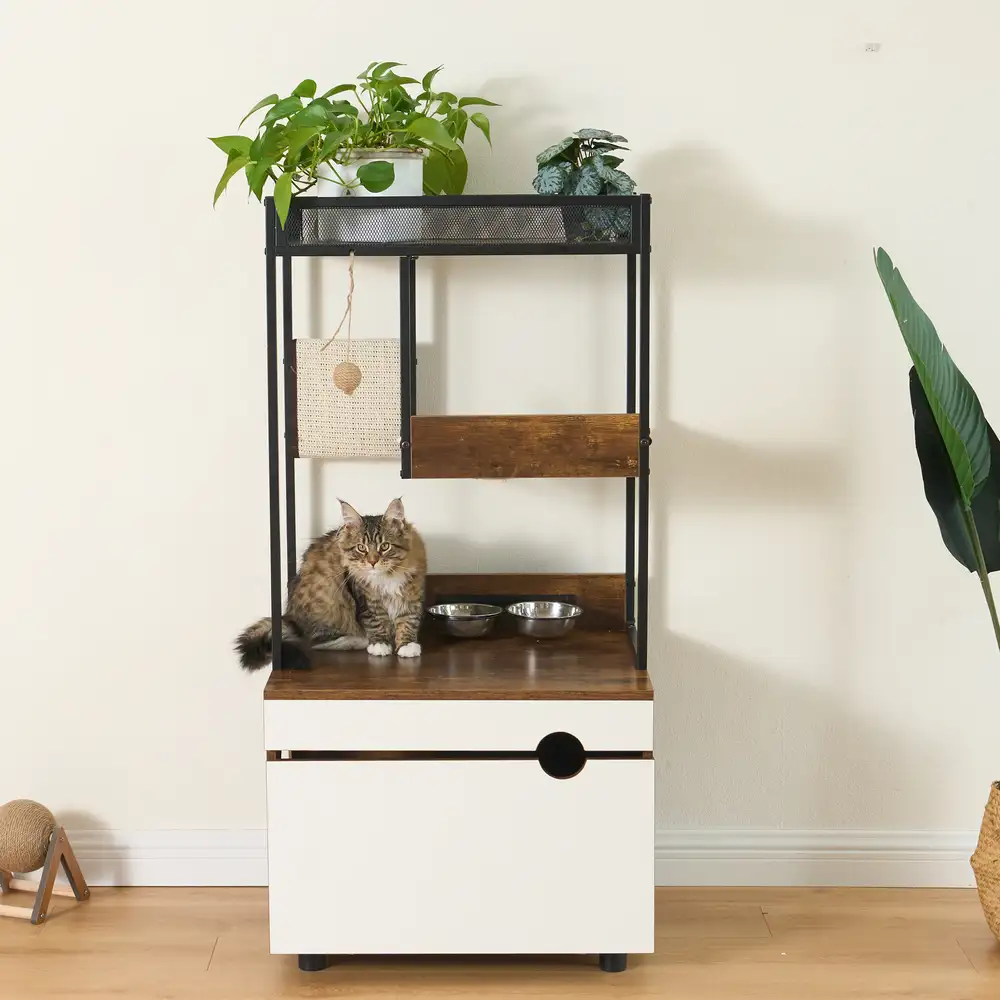
The OmniHaven Home Cat Tree Storage Cabinet stacks the climb, the nap platforms, and the storage into one piece. It’s built for people who want their cat enriched indoors without the living room turning into a pet aisle.
- Vertical climbing space your cat will actually use
- Resting platforms built into the frame
- A furniture look that sits with your room
- Storage for the pet stuff you’d rather hide
Frequently Asked Questions
Are cat trees with storage good for small apartments?
They fit small places well because they climb instead of spread, and the cabinet replaces a separate bin. Measure the corner first; a 20-inch footprint still needs a few inches of clearance so the door opens. In a tight studio, a slim tower beats a wide one.
Do indoor cats need a cat tree?
Not strictly, but a cat with no outlet claws the sofa or the blinds. A tree gives that energy a target. If your cat is older or less mobile, keep the lowest perch reachable without a big jump, since a tall climb may be more than they want twice a day.
What makes a good cat tree?
A steady base, screwed joints, a post your cat can actually scratch, and a perch with a view. Check the stated weight limit and read a few reviews on how it holds with a big cat. The thing people regret most is fabric that traps hair and won’t come clean.
Where should you put a cat tree?
Put it where your cat already hangs out, near a window or in the living room, with a few inches of wall clearance for the scratch post. Keep it off the heating vent; steady warmth warps the panels over time.
Are furniture-style cat trees better than traditional designs?
Better for many homes because they hide the pet gear and match the room. They cost more and take more floor space than a basic post, so if you’ve got a climber and no style concerns, a plain tower does the job for less.
How do I store cat supplies?
Use the cabinet for the daily stuff: the brush, the wipes, a spare toy, the open treat bag. Keep food sealed elsewhere; a cabinet near the litter area isn’t where you want kibble. Group by type so you’re not digging for it.
Conclusion
Picking a storage cat tree comes down to one balance: your cat’s needs and your room’s look. The right piece gives safe climbing, real rest spots, storage you’ll use, and a style that sits with the space.
More buyers want pet gear that doesn’t fight the room, and storage trees answer that. Pick one that works for the cat and for you, and the place stays calmer and cleaner for everyone.