
Cat Furniture for Small Apartments: How to Keep Two Cats and Your Calm
Two cats in a small apartment should feel cozy, not cramped. The right cat furniture for small apartments turns tight square footage into territory both cats can claim, and it hides the gear that usually ends up on the floor.
What Two Cats in a Small Place Actually Feel Like
You love both cats, and the apartment is yours. The litter box lands in the hallway, the second box ends up by the couch, and the cat tree you bought reaches the ceiling but reads as a carpeted tower blocking the window. The food bowls sit on the floor, the toys migrate under the sofa, and the scratching post leans in a corner you keep tripping over.
It does not feel like a home with pets. It feels like the pets moved in and you are renting space from them. The strange part is that none of it is the cats’ fault. The room is just too small for the number of separate items a two-cat life requires.
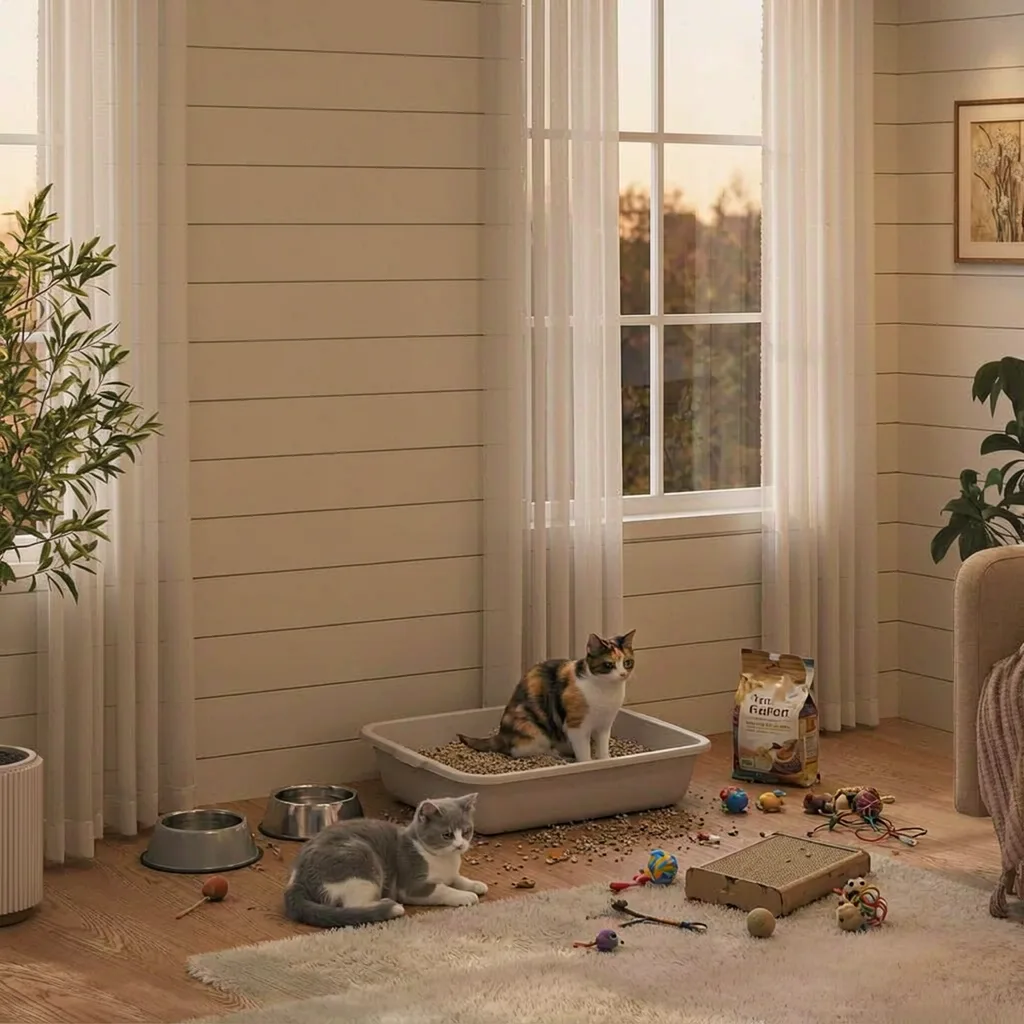
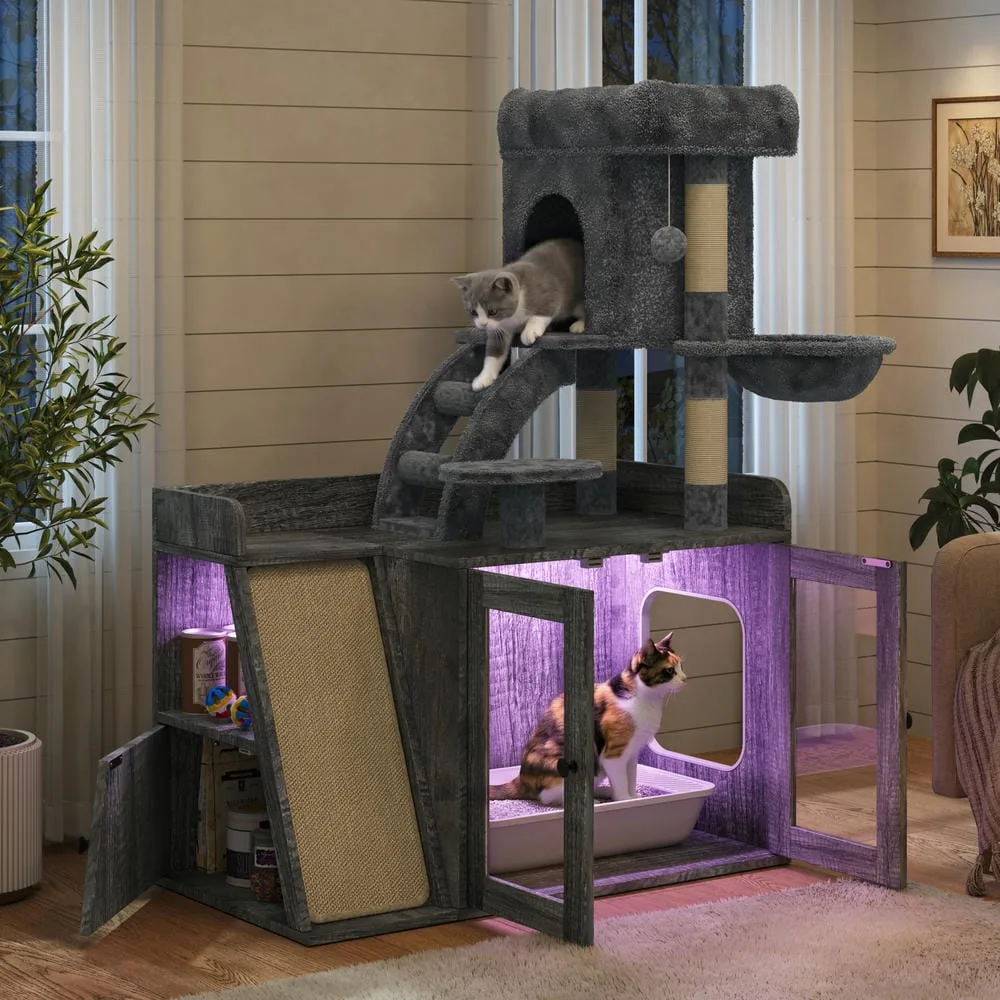
Illustrative comparison of the same space, before and after. The before scene is an illustration of a cluttered pet living space, not a real customer photo. The after image shows an OMNIHAVEN product in a styled setup, our own product photo.
The shift is not about owning less. It is about letting one piece of furniture carry three jobs at once. When the litter box disappears into a cabinet and the cats climb a tree that also stores their things, the floor opens back up and the room feels like yours again.
Why the Clutter Happens, According to How Cats Actually Live
Our read of the problem starts with a fact most guides skip. Cats are territorial, and in a small home every square inch is contested. Without places to climb and hide, a second cat has nowhere to retreat, and the friction shows up as pacing, guarding, or the kind of quiet stress you only notice weeks later.
The mess follows from the math. The common rule for litter boxes is one per cat, plus one extra, so two cats call for three boxes. Three boxes in a 600 square foot apartment is three pieces of gear you did not plan the room around. Add two feeding stations, a water fountain, a tree, a scratcher, and a bed, and the floor disappears.
Litter tracking makes it worse. An open box lets granules ride out on paws, and in a small space there is nowhere for them to disperse, so they collect in the one walkway you use. Odor builds the same way, because the box sits close to where you sit, eat, and sleep.
None of this means the apartment is too small. It means the furniture has to do more. Cat furniture for small apartments earns its place when it takes the functions that were scattered on the floor and folds them into one footprint.
A Plan That Actually Works in a Tight Space
You do not need a bigger apartment. You need a different layout, and the steps below come from what works in real small homes with two cats. Start with one change, then add the next once it feels settled.
1. Go up instead of out
Floor space is the scarce resource, so give the cats their own ground above it. A tall tree, wall shelves, or a perch by the window lets each cat claim high ground without costing you a single square foot. The second cat gets an exit route when the first one gets playful, which lowers the squabbles more than most owners expect.
2. Hide the boxes, all of them
With three boxes to place, hiding them is the only way the room stays livable. A litter box enclosure wraps each pan in a cabinet that looks like a side table, so the box lives in the room instead of dominating it. Keep one in the bathroom, one in a bedroom corner, and the third in the living area inside a piece that doubles as furniture.
3. Give each cat a door of its own
Resource guarding starts when bowls and boxes sit too close. Spread the feeding stations to opposite ends of the room, and keep the boxes in separate sightlines. The cats eat and eliminate without bumping into each other, and the calm you gain is real, not cosmetic.
4. Let one piece do two jobs
A cat tree that also hides a litter box, or a bench that stores the toys, removes two separate items from the floor. Look for pieces that combine a climb, a scratch, and a hide, because the fewer standalone objects you own, the less there is to trip over.
5. Give everything a home
The last step is the quiet one. Toys go in a bin, the scoop lives in the enclosure drawer, and the leash hangs by the door. When every item has a spot, the room stays tidy between cleanups instead of drifting back to chaos by Thursday.
Our take is simple. Cat furniture for small apartments is not a luxury item. It is the layout that makes two cats and a small room liveable at the same time.
What to Look for in Cat Furniture for Small Apartments
Shopping gets easier once you know the four checks that matter most in a tight room. Skip the features that look fun and hold out for the ones that save space.
- One footprint, several jobs. A piece that climbs, scratches, and hides the litter box replaces three items, which is the whole point in a small place.
- A real hide for the box. Look for a cutout entry, a litter catching grate at the door, and ventilated panels, because those three details cut tracking and odor near the source.
- A top you can style. If the piece reads as a side table or bench from across the room, you will keep it. A flat, finished top invites a lamp or a book, and that is what keeps it from looking like pet gear.
- Room for two. With multiple cats, check the interior fits the pans you own and the structure feels stable when both cats climb. A wobbly tower in a small room gets shoved into a corner and forgotten.
Measure the pan before you order, since a tight interior makes daily scooping awkward. Most owners find the right size on the second try, and the first check saves the return.
What the experts say about multi-cat homes
- The ASPCA’s cat care guidance stresses giving cats outlets for natural behavior, which is why vertical space and separate rest spots matter in a small home. Read the ASPCA cat care guide.
- Veterinary sources such as the Cornell Feline Health Center publish feline behavior and welfare guidance that supports giving each cat room to retreat. Visit the Cornell Feline Health Center.
Shop OMNIHAVEN cat furniture for small apartments
OMNIHAVEN builds pieces that hide the litter box and still earn their spot in the room. The three below solve the small space problem from different angles.
- Cat Tree Tower Litter Box Enclosure with Storage combines a climb, a scratch post, and a hidden litter box in one footprint. It is the pick when floor space is the constraint and two cats need vertical room.
- Cat Litter Box Enclosure with Scratching Pad hides one pan behind louvered doors, adds a scratching pad, and catches litter with a perforated entry grate. It suits a single box in a tight corner at a lower price.
- Cat Litter Box Enclosure Side Table gives two cats their own rooms, adds a pull out drawer for supplies, and works as an end table. It fits a living room or a bedroom corner where you need the surface back.
Frequently Asked Questions
Can two cats really share one litter box enclosure?
They can share the room, yet the box count still follows the one per cat plus one rule, so plan for three boxes in a two cat home. One enclosure can hold a single pan, and the side table model holds two smaller pans for cats that tolerate sharing. Spread the boxes across the room so neither cat guards all of them.
Will a cat tree in a small apartment make the room feel smaller?
A bulky tree in the walkway does, because it breaks the sightline and eats floor space. A slim tower tucked in a corner, or one built into a litter box cabinet, adds height without blocking the path. The room reads as larger when the eye travels up instead of stopping at a floor level obstacle.
How do I stop litter tracking in a studio?
Hide the box inside an enclosure with a perforated entry grate, then place a textured mat just outside the door to catch the rest. Scoop once a day in a small space, because odor and scatter build faster when the box sits close to where you live. A ventilated panel near the pan slows the smell between scoops.
Is cat furniture for small apartments worth the price?
It pays back the day one piece replaces a tree, a scratcher, and a litter box cabinet that would otherwise stand separately. The saving is floor space first and cleanup time second, and both matter more in a small home than in a house. Pick one hero piece, then add a second only if the room still feels short on territory.
My cats fight over the high spots. What do I do?
Give them two, not one. A second perch at a different height, or a window hammock across the room from the tree, lets the bolder cat take the top while the shy one keeps a lower retreat. The fights drop once neither cat feels boxed in, and the layout does the work instead of your interference.