
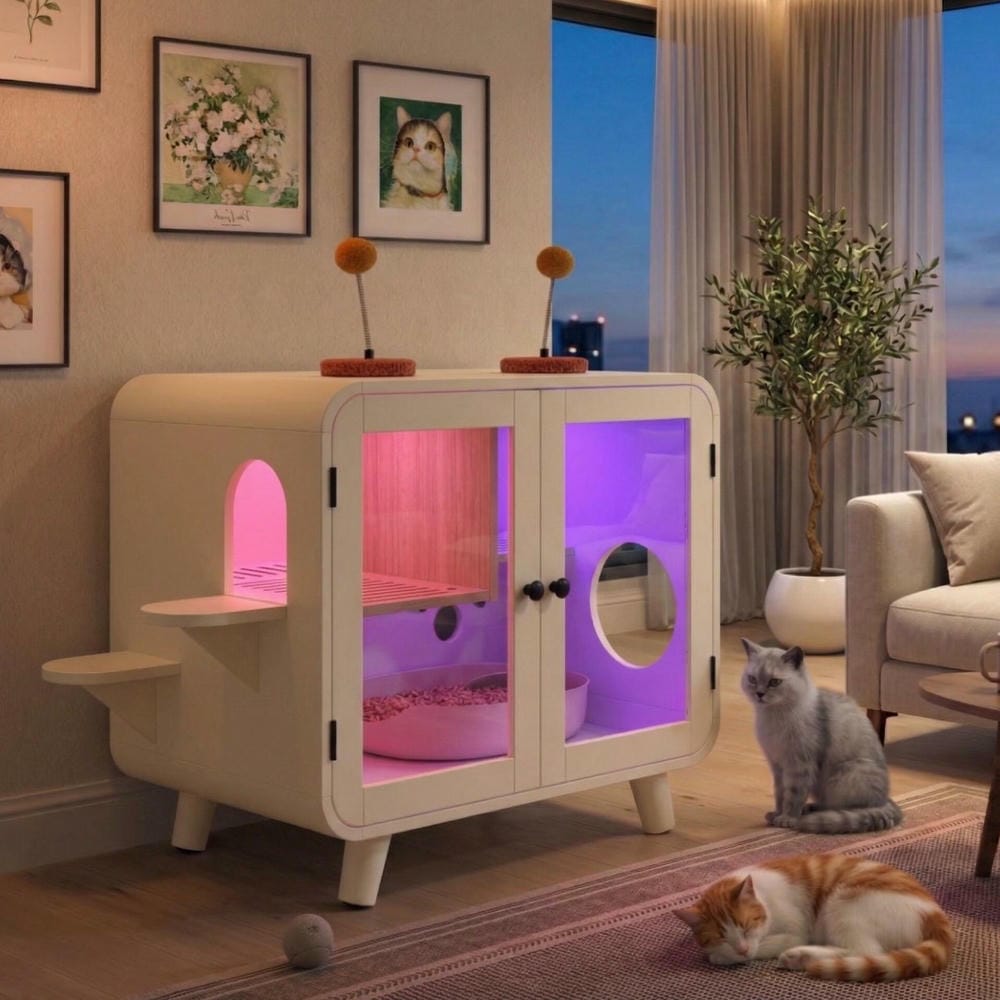
Hide the Litter Box So Your Living Room Still Looks Like a Living Room
Most people solve pet clutter the hard way, shoving the litter box behind the sofa and hoping no one notices. There’s a calmer option: a cabinet that hides the box and fits in with the rest of your furniture. Here’s how to make it work without giving up the look you already have.
Here’s the thing: a plain plastic tray is the one eyesore in an otherwise nice room. It drops litter on the floor, kicks dust onto the rug, and generally fights whatever else you’ve put there. If you’ve ever wedged one behind the sofa and called it a solution, you know the compromise never really works.
The real fix isn’t another plastic bin. It’s a cabinet that does two jobs: it hides the box and gives you storage you’d want anyway. Most modern litter box enclosures work the same basic way: they pair a hidden pan with shelves or a top you can use, so the corner stops being wasted space.
What Hidden Litter Box Furniture Actually Does
Space & Clutter
Massive footprint
Pet stuff tends to sprawl. Treats land in the kitchen, the leash ends up by the door, grooming gear migrates to the bathroom, and suddenly the room reads as cluttered even when everything’s technically put away.
Vertical zoning
A litter cabinet pulls that sprawl into one spot. The space above the pan holds treats, a spare roll of bags, and cleaning wipes, so your counters and shelves stay clear. It’s less about hiding the box and more about giving every pet thing a home. This litter box cabinet keeps your main surfaces free of clutter.
Odor & Tracking
Open trays, escaping smells
An open tray sits out in the open, lets smells drift into the room, and flings litter onto the floor every time your cat jumps out.
An enclosed sanctuary
The lower section of a litter box cabinet gives your cat a contained spot to do her business, with vents at the back so air keeps moving and smells stay put. A side entry with a small internal step catches loose litter on the way out, so less of it ends up on your floor.
Material & Durability
Wear, warp, and cheap looks
Cats and dogs are hard on furniture. A regular side table can warp if a little water spills, and the cheap plastic boxes you find at the pet store scratch and yellow within a year.
High-Quality Wood
These cabinets use dense High-Quality Wood boards with a water-resistant laminate, so they hold their shape and resist the usual nicks and spills. The surface wipes clean, and the piece reads as a normal end table or console rather than pet gear.
Reclaiming Your Living Room’s Design Integrity
Swapping a tray for a cabinet isn’t only about hiding the mess. It’s about not having to choose between your cat and your living room. The same High-Quality Wood build and clean hardware that keep the piece sturdy also let it sit next to your real furniture without looking out of place. You get the room back, and your cat gets a quiet, private corner. One thing to check first: compare the cabinet’s interior measurements with the box you already use, because a piece that’s an inch too short won’t do you any good, and a wide pan won’t fit a slim cabinet.
- Storage up top for supplies
- Enclosed, vented litter area with side entry
- Wipe-clean, scratch-resistant surfaces
- Doubles as an end table or console