
Why Is My Cat Avoiding the Litter Box? Causes, Stats, and Fixes
When your cat starts missing the box, the instinct is to assume bad behavior. If you have asked why is my cat avoiding the litter box, the answer is almost never spite. In reality, litter box avoidance is one of the most common and most misunderstood problems in cat care. This guide separates the myths from the data, covers what the research says, and shows how a well-designed hidden enclosure removes the usual triggers.
In This Guide
How Common Is It, Really?
Litter box avoidance is far more widespread than most owners expect. According to the Journal of Feline Medicine and Surgery, 10% to 15% of cats show signs of litter box aversion at some point. Moreover, broader estimates put lifetime inappropriate elimination at 10% to 24% of all cats.
First, this is the number-one reason cats are surrendered to shelters. Next, the stakes are concrete: a cat that eliminates outside the box weekly is about four times more likely to be relinquished, and a daily offender faces roughly 28-to-1 odds. Finally, the behavior is a distress signal, not a personal attack on your rug.
Rule Out Medical Causes First
Before changing the setup, call your vet. Therefore, a meaningful share of avoidance cases trace back to pain: urinary tract infections, arthritis, constipation, or kidney issues. In fact, studies cited by veterinary behaviorists place underlying medical causes in roughly 30% to 40% of cases.
However, owners often read the accident as “spite” and miss the symptom. On the other hand, treating the medical issue resolves the behavior in many cats once discomfort ends. Because pain and avoidance are linked, a veterinary check is the first, non-negotiable step.
The Environmental Triggers
When health checks out, look at the box itself. According to an ASPCA survey, 48% of owners cite cleanliness as the top factor in whether their cat uses a box. Furthermore, cats are creatures of preference: a 2017 Journal of Animal Welfare Science study found about 70% prefer clumping, unscented litter.
For example, strong perfumes can read as a warning signal, and the ASPCA notes most cats like just one to two inches of litter. In addition, location matters; cats want a quiet spot with a clear escape route, not a dead-end alcove. Because consistency builds habit, keep the brand, depth, and placement steady once your cat accepts them.
How a Hidden Enclosure Helps
A hidden litter box enclosure removes several common triggers at once. Consequently, the enclosed cabinet gives a shy or startled cat the privacy and exit options open trays lack. Meanwhile, double front doors let a cat leave fast if another pet approaches, which lowers the anxiety that drives avoidance.
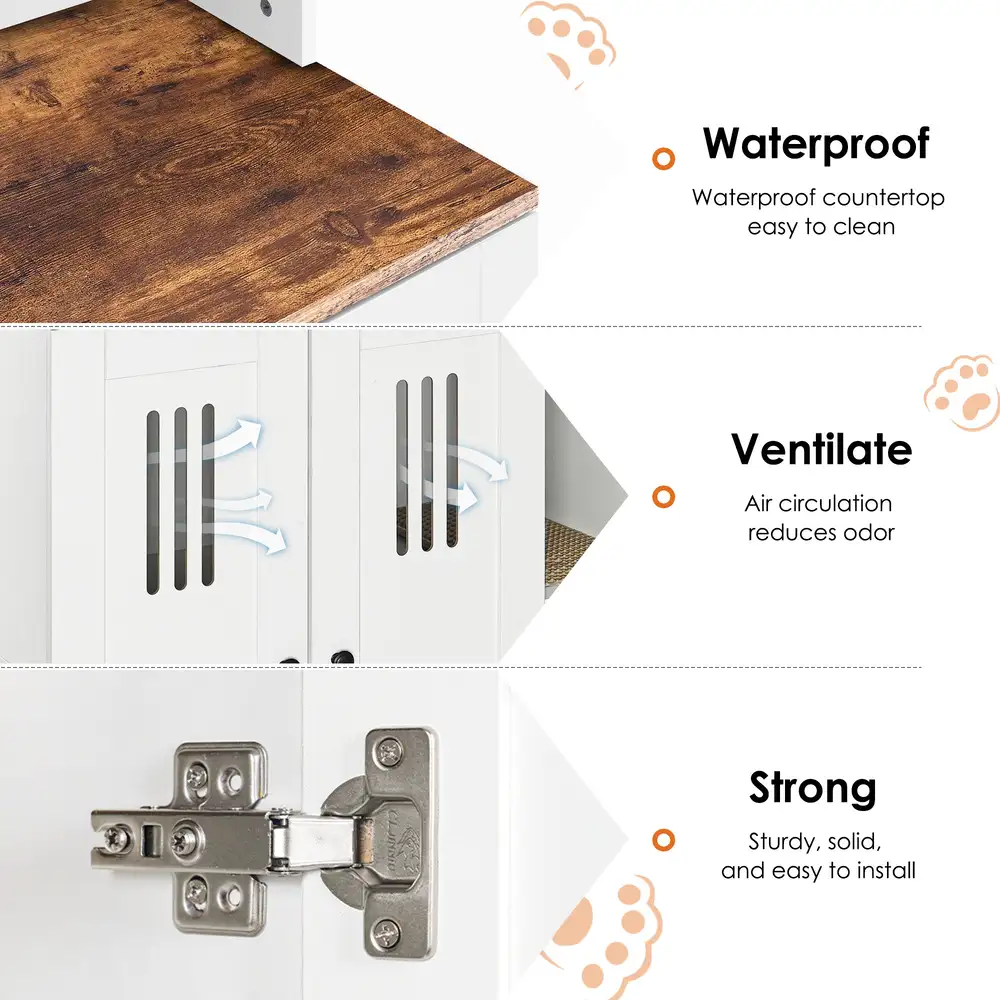
Moreover, built-in side vents keep air moving so the interior stays neutral between scoops, and the contained body cuts the scatter that makes owners over-clean with harsh sprays. Because the Cornell Feline Health Center stresses gradual, low-stress changes, an enclosure that feels like furniture is easier for a cat to accept than a clinical tray.
Multi-Cat Households
In homes with two or more cats, the N+1 rule becomes prevention, not luxury. Therefore, follow one box per cat plus one extra, spread across rooms. However, if one cat guards a shared box, the PetMD litter box center advises separate, quiet locations to stop the cycle.
Similarly, our guide on litter box count for two cats shows how a double enclosure plus one open box meets the rule in tight spaces. That said, no furniture replaces a vet visit when accidents appear suddenly.
Frequently Asked Questions
Why is my cat suddenly avoiding the litter box?
Sudden avoidance usually means pain or a changed environment. Rule out medical causes like UTIs or arthritis with a vet first, then check cleanliness, litter type, depth, and location.
How common is litter box avoidance?
Quite common: 10-15% of cats show litter box aversion per the Journal of Feline Medicine and Surgery, and lifetime inappropriate elimination is estimated at 10-24% of all cats. It is the top reason cats are surrendered to shelters.
What litter do most cats prefer?
A 2017 Journal of Animal Welfare Science study found about 70% of cats prefer clumping, unscented litter. The ASPCA also recommends keeping litter just one to two inches deep.
Can a hidden enclosure stop the problem?
It removes common triggers: privacy, a fast exit, ventilation, and contained scatter. It is not a cure for medical issues, but it lowers the stress and cleanliness problems that drive many cases of avoidance.
Trusted Cat Care & Market Resources
Shop the why is my cat avoiding the litter box
- Two side-by-side compartments hide both pans behind one white-and-walnut cabinet.
- Double front doors swing wide so you can scoop both boxes at once.
- Built-in side vents keep air moving, which helps the cabinet stay fresher.
- White & walnut finish with a top shelf that doubles as a console table.
- High-Quality Wood in a piece that ships free from our U.S. fulfillment partner.
If you are asking why is my cat avoiding the litter box, start with a vet, then fix the environment. Privacy, clean options, and a calm exit route solve most cases, and a hidden enclosure delivers all three. See the white-and-walnut enclosure that hides the box and calms the room.