
How Many Litter Boxes Do You Need for Two Cats? (The N+1 Math)
If you have two cats, the first question is usually how many litter boxes for two cats you actually need. The short answer from every major feline group is three. That sounds like a lot of plastic in a small apartment, which is exactly the problem this guide solves. Below, we walk through the math, the data behind why more homes now face it, and a space-saving way to meet the rule without filling your room with open trays.
In This Guide
The N+1 Rule, Explained
The standard recommendation is one litter box per cat, plus one extra. Therefore, two cats ideally need three boxes. This is not a guess; the ASPCA, the Humane Society, the American Association of Feline Practitioners (AAFP), and the Cornell Feline Health Center all state the same number.
First, the extra box gives every cat a clean option when one tray is occupied or being guarded. Next, it prevents the “I will just go on the rug” decision that follows a dirty or blocked box. Finally, boxes should sit in different rooms, because two trays touching count as one to a cat. In short, N+1 is an insurance policy against conflict and accidents.
Why More Homes Have Two Cats Now
The N+1 math matters to more people every year. According to the APPA 2025 Dog & Cat Report, 49 million U.S. households owned a cat in 2024, up from 40 million in 2023. Moreover, multi-cat living is growing fast: two-cat households rose 8% since 2018, and three-or-more-cat households jumped 36% in the same window.
For example, single-cat homes fell from 64% of cat owners in 2018 to 58% in 2024, while the average cat-owning household now has 1.9 cats. In addition, about 27% of cat homes have exactly two cats. Because the trend is real, the “where do I put three boxes” question is now a mainstream one, not a niche worry.
The Real Blocker: Floor Space
Three open trays are the hard part of the rule. Consequently, a 700-square-foot apartment can feel ruled by litter boxes rather than the cats. However, the problem is rarely the cats; it is the footprint of three separate pans plus their scatter zones.
Meanwhile, renters and first-time owners often lack a spare bathroom or laundry nook. On the other hand, leaving boxes in a busy hallway invites the very avoidance the N+1 rule tries to prevent. That said, the rule is about clean options, not about open trays specifically, which opens a smarter path.
Meeting N+1 in a Small Home
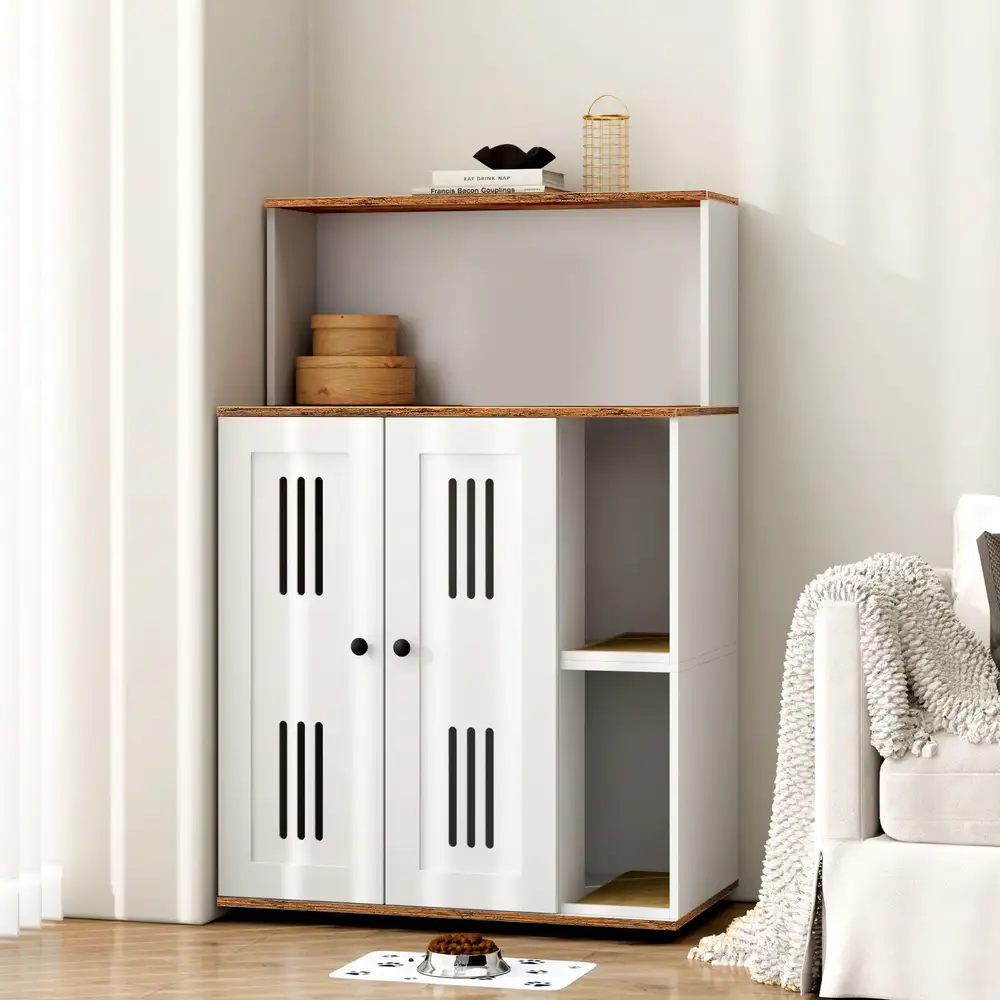
A double litter box enclosure hides two pans behind one piece of furniture, so you meet two of your three boxes in a single cabinet. As a result, you only need one more open box elsewhere to satisfy N+1. Furthermore, the cabinet measures about 58 inches wide and 23.6 inches deep, so it doubles as a console or bench instead of costing floor space.
In fact, placing the enclosure in the living room and a single open box in a bedroom gives two cats separate, quiet options across two zones. Because the enclosure’s side vents move air, the two hidden pans stay fresher between scoops. For more small-space ideas, see our guide to hiding a litter box in a small apartment.
When Can You Bend the Rule?
Veterinary behaviorists note the rule can flex when cats get along and boxes stay meticulously clean. Therefore, some two-cat homes run on two spotless boxes without trouble. However, the ASPCA warns that one cat can guard a shared box, so watch for blocking or sudden accidents.
Additionally, single cats still benefit from two boxes, since many refuse to pee and poop in the same tray. Similarly, our two-cat enclosure guide explains how to read your cats’ behavior before cutting corners. If conflict appears, add the third box rather than forcing the share.
Frequently Asked Questions
How many litter boxes do I need for 2 cats?
Three, by the N+1 rule: one per cat plus one extra. The ASPCA, Humane Society, AAFP, and Cornell Feline Health Center all recommend this number to reduce territorial conflict and accidents.
Why are multi-cat households increasing?
Per the APPA 2025 Dog & Cat Report, U.S. cat-owning households rose to 49 million in 2024, two-cat homes grew 8% and three-plus-cat homes 36% since 2018, so more owners now face the three-box math.
How do I fit three litter boxes in a small apartment?
Hide two pans in one double enclosure (about 58 inches wide, doubling as a console), then add one open box in another room. That meets N+1 across two zones without three loose trays.
Can two cats share one litter box?
They can, but most experts advise against it. Cats often refuse a box another cat has used, and one cat may guard it. Keep a separate, clean option available to prevent avoidance.
Trusted Cat Care & Market Resources
Shop the how many litter boxes for two cats
- Two side-by-side compartments hide both pans behind one white-and-walnut cabinet.
- Double front doors swing wide so you can scoop both boxes at once.
- Built-in side vents keep air moving, which helps the cabinet stay fresher.
- White & walnut finish with a top shelf that doubles as a console table.
- High-Quality Wood in a piece that ships free from our U.S. fulfillment partner.
For two cats, plan on three litter boxes by the N+1 rule, and treat floor space as the real puzzle. A double enclosure covers two pans in one cabinet, leaving you to place a single open box elsewhere. See the white-and-walnut double enclosure and start your setup.